What Are the Top Private Label Clothing Manufacturers?
Choosing among the top Private Label Clothing manufacturers requires more than comparing prices. A polished website can hide weak quality control, slow sampling, or inconsistent sizing. The real test appears in the details: a clean neck label, even stitching, accurate color matching, and fabric that survives repeated washing.
Thomas J. Beall, a recognized apparel industry consultant and author, has observed, “The apparel supply chain is not a simple transaction; it is a relationship built on trust and performance.” That principle matters when evaluating factories for custom collections. Strong manufacturers should explain minimum order quantities, provide transparent production timelines, and offer practical sample revisions. They should also discuss fabric sourcing, compliance documentation, inspection procedures, and packaging requirements without vague promises.
Look beyond the first quotation.
The best partner may not be the cheapest option. A factory with slightly higher costs can reduce returns, rework, and damaged brand credibility. Still, no manufacturer is perfect. Sampling may take longer than expected, communication may occasionally feel uneven, and early specifications may need revision. That is why experienced buyers test suppliers with small orders before committing to large production runs.
This guide examines leading Private Label Clothing manufacturers through quality, customization, communication, scalability, and reliability. It also considers the less visible risks, including unclear production ownership and inconsistent factory oversight. The goal is not to name one universal winner. Different brands need different capabilities, whether they sell heavyweight hoodies, tailored uniforms, sustainable basics, or small seasonal collections.
What Is a Private Label Clothing Manufacturer?
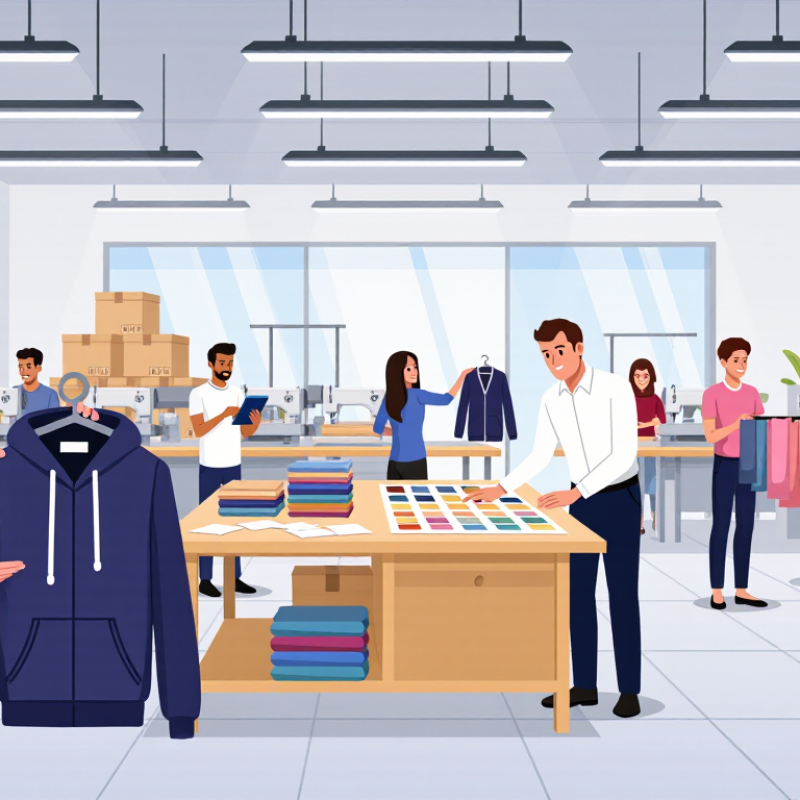
A private label clothing manufacturer produces garments that another company sells under its own label. The manufacturer may handle fabric sourcing, pattern development, sampling, production, labeling, and packing. Unlike a simple wholesaler, it usually converts a design brief into a finished product.
The term is still fuzzy.
Some factories only sew customer-supplied materials. Others offer full-package production, including technical sketches, fabric selection, grading, and quality control. Buyers should ask about minimum order quantities, sample fees, lead times, defect policies, and testing procedures. A clear measurement sheet matters. One missing tolerance can change the fit across an entire size range.
Industry data shows why this work requires careful planning. Textile Exchange reported that global fiber production reached 124 million tonnes in 2023 and may reach 160 million tonnes by 2030. Material choices will therefore affect both cost and sourcing risk. The State of Fashion 2025, published by McKinsey and The Business of Fashion, projected low single-digit growth for the global fashion market in 2025. Manufacturers must compete through consistency, not promises alone.
A reliable supplier should provide pre-production samples, material records, inspection reports, and realistic delivery schedules. Buyers should verify these claims through sample orders and independent checks. A polished factory tour proves little.
Experience helps, but it is not evidence by itself. A spreadsheet cannot replace a physical sample, and even experienced teams can overlook shrinkage after washing. That uncomfortable step often reveals the manufacturer’s real capability.
How to Identify the Best Private Label Clothing Suppliers
When identifying the best private label clothing suppliers, examine more than their catalog. Request physical samples before discussing large orders. Inspect the seams, hems, labels, fabric weight, and stitching consistency. A reliable supplier should explain production steps clearly and answer technical questions without vague promises. Ask about minimum order quantities, sample fees, production capacity, and realistic lead times.
Experience matters here. I once trusted attractive product photos and ignored uneven sizing in a sample. That mistake created extra fitting work later. Use a measurement chart and test the garment after washing. Check whether the supplier maintains written quality procedures, trained inspectors, and documented material information. Their records should support claims about fabric composition, workplace standards, and product safety. Verify important evidence instead of accepting polished statements.
Communication
Communication also reveals professionalism. Request a detailed quotation showing materials, labor, packaging, shipping terms, and possible revision costs. A dependable partner reports delays early and provides photos during production. Ask for a small trial order before scaling. Review defect rates, packing accuracy, response time, and the supplier’s willingness to correct problems. No supplier is perfect. What matters is consistent performance, honest reporting, and a practical improvement process.
Which Services and Production Options Do They Offer?
Private label clothing manufacturers support more than basic garment production. Many offer design development, fabric sourcing, pattern making, sampling, grading, and bulk manufacturing. Some also provide embroidery, screen printing, woven labels, hangtags, packaging, and quality inspections. Production options may include low minimum order quantities, small-batch testing, seasonal collections, and larger repeat orders.
A dependable manufacturer should explain fabric composition, shrinkage, colorfastness, lead times, and defect standards clearly. Ask for a physical sample before approving bulk production. Check measurements on a flat table, inspect seams, and wash the garment when possible. Real production experience matters because a beautiful sample can still hide inconsistent sizing. That mistake is common.
Tips: Request a written quotation with every cost included. Confirm whether sampling fees, labels, packaging, and shipping are separate. Ask how the factory handles rejected pieces and late delivery. A video call can also reveal useful details, such as cutting-table capacity and actual workflow. Do not choose only by the lowest price. Cheap fabric, rushed stitching, or weak communication may create higher costs later. I have found that clear specifications prevent more problems than urgent corrections. Still, no supplier is perfect, and even strong systems need regular inspections.
How to Choose the Right Manufacturer for Your Clothing Brand
What Are the Top Private Label Clothing Manufacturers?
How to Choose the Right Manufacturer for Your Clothing Brand
Choosing a private label clothing manufacturer requires more than comparing prices. Start with product experience, production capacity, and communication quality. Ask for recent samples, not only catalog photos. Check stitching, fabric weight, shrinkage, colorfastness, and label placement. A reliable manufacturer should explain these details clearly.
Request a written quotation with minimum order quantities, sample fees, production times, packaging costs, and payment stages. Confirm whether the factory can follow your tech pack accurately. Visit the facility when possible, or arrange a documented virtual inspection. Ask how workers inspect seams and measure finished garments. Small errors can become expensive across hundreds of pieces. Promises are cheap. Evidence matters more.
Tips: Compare at least three manufacturers. Test one small order before scaling. Use a sample checklist with exact measurements and acceptable tolerances. Review communication speed during development, because delays often appear before production begins. Confirm material documentation and quality procedures in writing. Independent inspections can add useful protection. No supplier is perfect, and even a careful team may miss a loose thread or uneven hem. That is why your review process should include photos, measurements, and a final approval sample. Reflect after each order, too. A manufacturer that fits today’s basics may not suit future technical garments.