What Are the Top Private Label Dress Manufacturers?
Choosing the right Private Label Dress manufacturer requires more than comparing catalog photos or quoted prices. A polished sample can hide weak stitching, unstable sizing, or delayed production. Reliable evaluation must examine fabric sourcing, pattern development, sampling speed, minimum order quantities, quality control, and communication.
Market conditions make this decision more important. The Business of Fashion and McKinsey’s State of Fashion 2025 report describes fashion as a low-growth industry facing cautious consumers and continued cost pressure. Manufacturers must therefore offer efficiency without sacrificing fit, durability, or brand identity. Textile Exchange’s Materials Market Report 2024 reported that global fiber production reached approximately 124 million tonnes in 2023. It may approach 160 million tonnes by 2030. That scale highlights the importance of material transparency and responsible sourcing.
A strong manufacturer should provide measurable evidence. Look for fabric composition records, pre-production samples, inspection procedures, production timelines, and clear corrective-action policies. A capable partner can also translate a sketch into a wearable garment, from neckline balance to hem movement on the body. Small details matter.
No list is perfect.
The “top” suppliers differ by business model. One may excel in small-batch boutique production, while another handles large-volume retail programs. Some specialize in evening dresses, resort wear, modest styles, or sustainable fabrics. This guide compares leading Private Label Dress manufacturers through practical criteria, including product quality, customization, capacity, transparency, and buyer support. The ranking should still be tested against your own samples, target market, and delivery requirements. A supplier’s reputation is useful, but verified performance matters more.
What Are Private Label Dress Manufacturers?
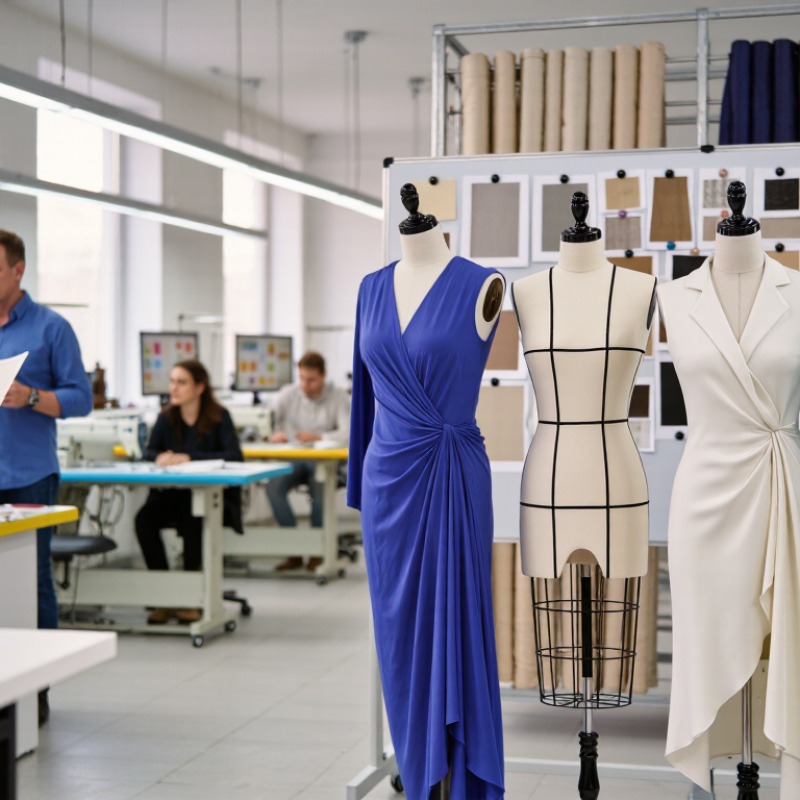
Private label dress manufacturers produce garments sold under a retailer’s label, not their own. They manage pattern development, fabric sourcing, sampling, grading, production, and sometimes packaging. This differs from a wholesaler, which usually resells finished stock. The distinction matters. A manufacturer should translate a sketch into a fit-tested dress, not merely attach a label.
Market evidence explains the model’s appeal. Grand View Research reported the global private label clothing market at about USD 225.8 billion in 2023, with projected growth through 2030. McKinsey and The Business of Fashion estimated fashion industry growth at only 2% to 4% in 2025. Slower growth makes controlled costs and differentiated products more valuable. Yet market forecasts use different definitions, so buyers should treat them as directional, not absolute.
A capable factory shows measurable process evidence. Ask for a development timeline, fabric composition records, size-grade samples, and inspection reports. Verify production capacity against your order quantity. A small workshop may offer closer communication, while a larger plant may provide steadier output. Neither is automatically better. The right private label dress manufacturer can explain minimum order quantities, sampling fees, quality tolerances, and corrective actions clearly. Request a pre-production sample. Check the waist seam, lining, zipper, hem, and color under daylight. I would not rely on photographs alone. They hide fabric weight and finishing flaws. Sustainable claims also need documents, not promises; Textile Exchange’s Materials Market Report can support fiber research, although it does not certify a supplier.
What Are the Top Private Label Dress Manufacturers?
The chart shows typical calendar-day planning benchmarks for private label dress production. Sampling and bulk manufacturing usually require the most time, while quality control and packing are shorter final-stage processes. Actual timelines vary according to design complexity, order quantity, fabric availability, and customization requirements.
How Are the Top Private Label Dress Manufacturers Evaluated?
Evaluating top private label dress manufacturers requires more than comparing price lists. In production work, I begin with fabric samples, stitching density, seam strength, and lining quality. A dress should keep its shape after washing, not only look attractive under showroom lighting. Small details matter. Uneven hems often reveal weak quality control.
A reliable manufacturer explains minimum order quantities, sampling fees, production schedules, and revision costs in clear language. I also check whether the factory can manage grading, labeling, packaging, and repeat orders consistently. Their technical team should understand measurements, fabric behavior, and fitting corrections. Written quality standards are useful, but actual inspection records offer stronger evidence. Ask for recent production photos and independent customer references when possible.
Compliance and communication deserve equal attention. The manufacturer should provide relevant material information, workplace documentation, and product testing records for the target market. Regular updates can prevent a minor pattern error from becoming hundreds of defective dresses. Still, no evaluation is perfect. A polished sample may hide production weaknesses, and an impressive factory may struggle during busy seasons. I prefer a small trial order before making a larger commitment. It reveals packing accuracy, deadline discipline, fabric consistency, and how honestly the team handles mistakes. Weak communication is a warning sign. Consistent replies are not enough; the answers must be specific, practical, and supported by evidence.
What Services Do Private Label Dress Manufacturers Provide?
Private label dress manufacturers now provide far more than factory production. Their services often begin with design development, trend interpretation, and technical specification. A manufacturer may turn a sketch into a tech pack with measurements, seam details, fabric requirements, and construction notes. It can also recommend suitable materials, trims, linings, and closure systems.
Sampling is a central service. Teams usually create prototypes, revise fit, and prepare size grading before bulk production. Some suppliers provide fabric sourcing, color matching, label application, packaging, and shipment coordination. Quality control may include measurement checks, stitching inspections, color review, and final random inspections. According to the 2024 Textile Exchange Materials Market Report, global fiber production reached 124 million tonnes in 2023. This pressure makes material traceability and recycled-fiber guidance increasingly valuable services.
Compliance support also matters. Manufacturers may help organize fiber-content documentation, testing records, care labels, and production specifications for different markets. The McKinsey and BoF State of Fashion 2025 report describes a difficult environment shaped by cautious consumers and persistent cost pressure. That reality explains the demand for flexible minimums, clearer costing, and shorter sampling cycles. Still, service quality varies. A low quotation may exclude pattern corrections or inspection work. I would ask for a complete service list before comparing prices. Small details matter. A missing measurement or unclear fabric standard can create expensive revisions later.
How Do Quality, Pricing, and Minimum Orders Compare?
Comparing private label dress manufacturers starts with measurable quality, not attractive sample photos. Experienced buyers request fabric composition, shrinkage results, seam strength, colorfastness, and measurement tolerances. A sample should be tested after washing. That reveals more. Ask whether production uses the same fabric and trims as the approved sample. Material substitutions can create unexpected problems.
Unit quotes can mislead. Request a cost sheet covering fabric, pattern making, grading, labels, packaging, inspection, and freight separately. Lower prices may reflect simpler lining, thinner interlining, or limited quality checks. Compare landed cost, not the factory price alone. A reliable quote should explain changes caused by order volume, fabric selection, or construction details. Payment schedules and sample fees also affect cash flow. In practice, a mid-range quote may be safer than the cheapest offer.
Minimum orders often vary by color, size, and fabric. A manufacturer may accept 100 dresses total but require 50 pieces per color. Clarify this in writing. Smaller trial orders reduce inventory risk, although unit costs usually rise. Larger orders improve pricing but can expose sizing mistakes across hundreds of garments. One overlooked issue is replenishment. Can the factory repeat the same shade and fit three months later? No answer is perfect. I would treat vague claims as unverified until production records, inspection photos, and a pre-shipment check provide stronger evidence.
How Can Brands Select the Right Manufacturing Partner?
Selecting the right private label dress manufacturer requires more than comparing factory prices. A suitable partner should understand your design, target customer, and delivery expectations. Ask for recent samples using similar fabrics and construction methods. Inspect the shoulder seams, zipper finish, lining, and hem width carefully. Small flaws often become expensive when production reaches thousands of pieces. Look closely.
Request a detailed quotation that separates fabric, cutting, sewing, packaging, and shipping costs. Confirm minimum order quantities, sample charges, production capacity, and lead times in writing. The manufacturer should explain how it checks measurements during production. Ask whether inspections occur before cutting, during sewing, and before packing. Independent quality checks can add confidence, especially for new relationships. However, paperwork alone does not prove reliability. A factory may present polished documents while communication remains slow or unclear.
Evaluate communication through a small trial order before committing to a large collection. Measure how quickly the team answers questions and handles a changed measurement chart. Cost matters, but the lowest offer may conceal weaker fabric, rushed stitching, or uncertain delivery. Compare at least three quotations with identical specifications. It is easy to focus on the sample and ignore production consistency. That mistake can damage customer trust. Choose a partner that admits limitations, documents solutions, and gives realistic timelines. Leave room for revision.