How to Choose Embroidered Polo Shirts for Your Brand?
Choosing the right Embroidered Polo Shirts can shape how customers remember your brand. A neat chest logo suggests consistency, while uneven stitching can weaken that impression. Fit matters. Fabric matters. Small details matter.
Grand View Research valued the global custom T-shirt printing market at approximately USD 4.3 billion in 2022. It also projects strong growth through 2030, reflecting continued demand for personalized apparel. However, printed and embroidered products behave differently. Embroidery adds texture, durability, and a more premium appearance, but heavy stitching may feel uncomfortable on lightweight fabric. This difference deserves careful testing.
McKinsey’s State of Fashion reports highlight stronger consumer attention to value, quality, and product longevity. Cotton Incorporated’s Global Lifestyle Monitor also identifies comfort, appearance, and durability as important clothing considerations. These findings support a practical approach: compare cotton, recycled polyester, and blended fabrics before placing a large order. Check collar recovery after washing. Inspect thread tension around letters. Ask whether the logo remains readable from two metres away.
A professional supplier should provide fabric specifications, embroidery samples, color references, and wash-test results. Yet samples can mislead. A perfect prototype may not represent bulk production. That is an uncomfortable possibility, but it deserves attention. Confirm production tolerances, replacement policies, and delivery timelines in writing. The best choice balances brand identity, employee comfort, budget, and repeatability—not merely the lowest quotation.
Define Brand Requirements: Audience, Use Case, Fit, and 180–220 GSM Weight
Define the brand requirements before choosing embroidered polo shirts.
Identify the audience, setting, expected movement, and washing frequency. A golf event, warehouse team, and reception desk need different solutions. The Textile Exchange Materials Market Report 2024 estimates global fiber production reached 124 million tonnes in 2023. That scale makes material selection more than a design decision. Ask suppliers for fiber content, shrinkage results, colorfastness data, and test methods.
For most branded polos, 180–220 GSM offers a practical middle range. It feels substantial without becoming heavy during outdoor work. Lighter fabric may improve airflow, but embroidery can pucker thin piqué. Heavier fabric can support dense stitching, yet it may feel warm under direct sunlight. Choose cotton, blends, or recycled fibers according to climate and care needs.
The International Trade Centre’s 2023 textile trade data shows apparel remains a globally distributed industry, so supplier claims should be checked against certificates and laboratory reports. Do not rely on a fabric label alone.
Fit needs equal attention. Measure chest, shoulder, sleeve opening, and body length on a real sample. Compare them with the wearer’s usual work movement. A relaxed cut can support layering, while a narrow cut may look sharper in hospitality settings. Test the actual logo at full size. It may feel too large. Wash samples three times, then inspect thread tension, collar shape, and color change. This step is easy to skip, and that is where my earlier sampling decisions have sometimes failed. Small details expose big assumptions.
Compare Cotton, Polyester, and Blends by Breathability and ≤5% Shrinkage
How to Choose Embroidered Polo Shirts for Your Brand?
Breathability and shrinkage should guide polo shirt selection, not appearance alone. Cotton feels soft and absorbs moisture, making it comfortable in warm offices and outdoor events. However, wet cotton can dry slowly and lose shape without proper finishing. Polyester dries faster, resists wrinkles, and usually keeps its dimensions. Its lower moisture absorption may feel less comfortable in humid conditions. Blends can balance softness, drying speed, and durability, but their performance depends heavily on the ratio and knit structure.
Textile Exchange’s Materials Market Report 2024 estimates that polyester represented about 57% of global fiber production in 2023. Cotton accounted for roughly 19%. These figures show polyester’s industrial importance, not automatic comfort superiority.
In practical wear tests, a lightweight pique knit often breathes better than a dense jersey, regardless of fiber. AATCC TM135 and ISO 5077 provide recognized methods for measuring dimensional change after laundering. Set ≤5% shrinkage as a purchasing requirement, and request test results from the actual fabric lot. A generic fabric certificate is not enough.
Tips:
Wash sample polos three times before approval. Measure chest width, body length, and sleeve length. Check embroidery after washing. Dense stitching can stiffen the chest and reduce airflow. My own fitting checks sometimes favor blends, but that preference is imperfect. Climate, garment weight, and wearer activity can change the result. Ask for a production sample, not only a swatch.
Set Logo Specifications: 70–100 mm Width and 4–6 mm Letter Height
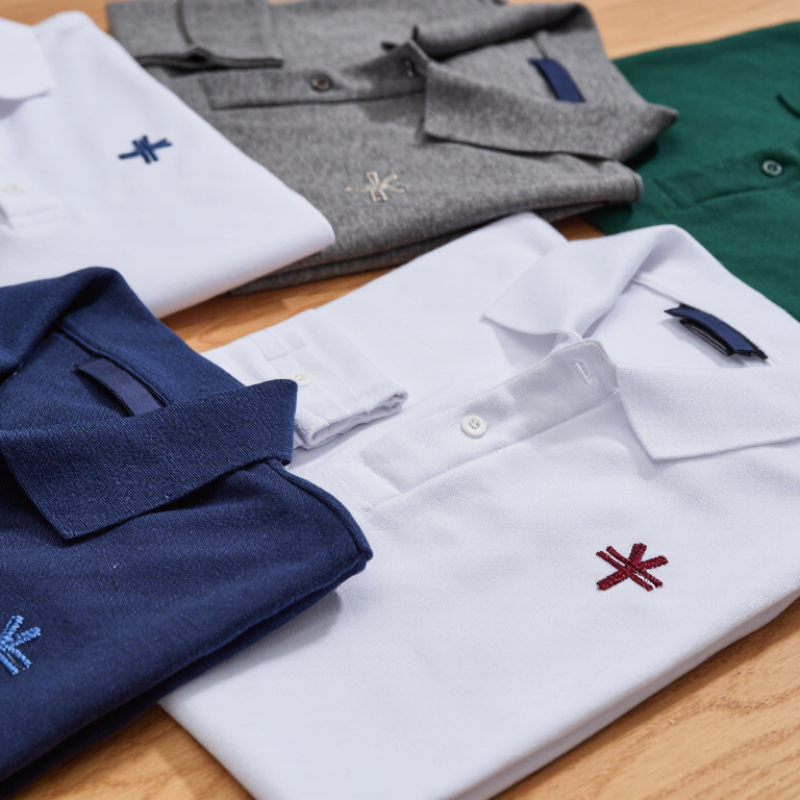
Choosing an embroidered polo shirt begins with matching the logo to the garment, not simply selecting the brightest thread. A logo width of 70–100 mm usually suits the left chest area without making the shirt feel crowded. Measure the design on the actual polo, because fabric stretch can change its appearance.
Letter height matters even more. Keep letters around 4–6 mm high for clear reading after embroidery. Smaller text may lose counters, especially in dense fonts or tightly woven thread. Test the logo on a fabric sample first. I have seen attractive artwork become muddy when converted directly from a screen file. That mistake is easy to make.
Tips: Use a clean, medium-weight font and avoid overly thin strokes. Ask the embroidery technician to check spacing between letters. Keep at least 1 mm between small details where possible. Compare the sample from normal standing distance, not only close up. A 90 mm logo may look perfect on one size, yet slightly large on a smaller shirt. Size grading deserves attention.
Thread color should contrast clearly with the polo, but extreme contrast can expose uneven stitching. Request a digital proof and a physical test piece. This adds time. It can prevent expensive rework. Also inspect the reverse side for excessive backing or loose threads, since comfort affects whether employees actually wear the shirts.
How to Choose Embroidered Polo Shirts for Your Brand?
Logo specifications for clear and balanced embroidery: 70–100 mm width and 4–6 mm letter height.
Keep the embroidered logo width between 70 and 100 mm. Letter heights from 4 to 6 mm provide a practical specification range for maintaining legibility on polo shirts, while the final size should be checked against the fabric, stitch density, and logo complexity.
Evaluate Embroidery Quality Using 40-Weight Thread and Secure Backing
How to Choose Embroidered Polo Shirts for Your Brand?
A polished polo begins with thread selection, not artwork alone. In commercial embroidery, 40-weight thread offers a balanced stitch appearance for logos, lettering, and moderate detail. It is fine enough for clean edges, yet strong enough for repeated handling. However, thread weight is not a complete quality test. Fiber type, stitch density, needle size, and machine tension also affect the result. Grand View Research valued the global custom T-shirt printing market at about $5.09 billion in 2023, showing how crowded personalized apparel has become. Small production mistakes can quickly damage a brand’s visual consistency.
Turn the polo inside out. A reliable embroidery sample should have smooth, secure backing with no loose tails or sharp adhesive edges. Cut-away backing usually supports dense designs better than lightweight tear-away material, especially on flexible piqué fabric. Check the front for puckering, uneven satin columns, and tiny gaps around letters.
Then wash a sample according to its care label for at least five cycles. Inspect it again. I have found that some attractive samples weaken after laundering, which is an easy detail to miss.
Do not overtrust a perfect showroom piece. Request samples on the actual polo fabric and compare dark and light garments. Textile Exchange reported 124 million tonnes of global fiber production in 2023, making material efficiency increasingly relevant.
Choose a design that uses sensible stitch coverage, not unnecessary density. A secure backing should support the logo without making the garment feel stiff. Slight imperfections may remain, but they should be understood, measured, and corrected before bulk production.
Approve Samples with ISO 105-C06 Colorfastness and AQL 2.5 Inspection
Choosing embroidered polo shirts requires more than matching thread colors to a logo. Approve a physical sample before bulk production. Check the collar shape, fabric weight, stitch density, and embroidery backing. A practical sample review should include washing, rubbing, and close inspection under natural light. ISO 105-C06 colorfastness testing helps measure how the fabric reacts to domestic or commercial laundering. Request the test method, washing temperature, detergent conditions, and grading results. Details matter.
The embroidery should remain sharp after washing, without bleeding into white fabric. Inspect the shirt when damp and dry. Look for loose threads, puckering, uneven letters, and distorted chest placement. AQL 2.5 inspection provides a structured quality checkpoint for bulk goods. Confirm the sampling plan, critical defects, major defects, and minor defects before production starts. A trained inspector should compare finished shirts with the approved sample, not memory. Keep signed sample records, test reports, and measurement charts together. That creates traceability when questions arise.
There is still room for error. A perfect sample may not represent every carton. Thread tension can vary between machines. Lighting can also hide subtle shade differences. For this reason, inspect production units before shipment and retain random pieces from each lot. Use experience, test evidence, and honest review together. A slightly imperfect sample deserves discussion, not automatic approval.