China’s leatherwear sector offers a wide range of partners for brands seeking Leather Biker Jackets, from small workshops to large export-focused factories. Yet a polished product photo cannot tell you how a jacket feels after months of wear. Stitch density, zipper performance, hide consistency, and fit all deserve close attention.
Irving Schott, co-founder of Schott NYC and a pioneer of the motorcycle jacket, is credited with saying, “I made the first leather motorcycle jacket with a zipper.” That practical detail still matters. A zipper should move smoothly, sit flat, and withstand repeated use. So should every seam.
This guide introduces leading manufacturers in China and the details buyers should verify before choosing one. It considers leather sourcing, pattern development, sample quality, production capacity, and communication. Ask for close-up photos of seam allowances and hardware. Request a sample, then inspect it in daylight. Small flaws show up there.
A reliable supplier should explain its materials and process clearly. It should also answer questions about minimum orders, lead times, and quality checks without vague promises. These checks do not guarantee a perfect partnership. No shortlist can. But they can reveal whether a factory understands both the look and the job of a biker jacket. Some details may still be missed; that is worth admitting. A careful review makes the next conversation more useful, and the final choice more informed.
China’s leather biker jacket industry draws on a broad base of leather processing, garment making, and hardware suppliers. The World Footwear Yearbook 2024 reports that China produced about 13.1 billion pairs of shoes in 2023. This is footwear data, not jacket output, but it signals the scale of the country’s leather and supply-chain ecosystem. That matters. In jacket production, skilled cutting and consistent hide selection remain crucial. A maker may inspect grain, thickness, and surface marks before panels are cut; small differences can affect the finished fit and appearance.
Manufacturers commonly offer sampling, pattern adjustment, stitching, lining, and hardware coordination. Buyers should ask how leather origin and material specifications are documented, and request checks for seam strength, zipper function, and color consistency. These practical details reveal more than a factory’s stated capacity. Yet the data has a blind spot: broad industry figures cannot show how many facilities specialize in biker jackets, or how consistently they control quality. Production can look polished in a sample room and vary on a larger order. That is worth questioning. A clear approval sample and written inspection criteria help reduce that gap.
| Manufacturing Dimension | Typical Options or Checks | Relevance to Biker Jackets |
|---|---|---|
| Leather type | Cowhide, goatskin, and sheepskin are commonly used garment leathers; the choice depends on the required hand feel, weight, and appearance. | Cowhide is often selected for a firmer, more substantial jacket, while goatskin and sheepskin can provide a softer feel. |
| Material thickness | Garment leather thickness is specified in millimetres and should be confirmed against the approved sample and product specification. | Thickness affects drape, weight, sewing performance, and the finished jacket’s feel; consistency across panels helps achieve a uniform result. |
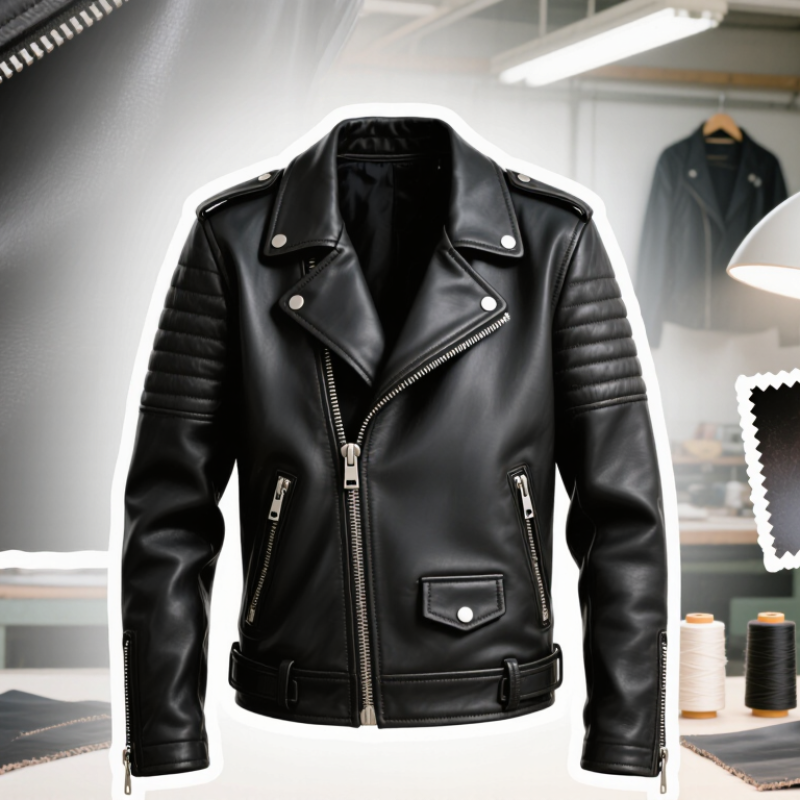
| Pattern and fit | Patterns can be developed from a specification sheet, measurement chart, or reference sample; fit may be adjusted through sample reviews. | A biker silhouette commonly includes an asymmetric front closure, a close-fitting body, and sleeves shaped for movement. |
| Cutting and panel matching | Leather panels are inspected and cut with attention to grain, surface marks, stretch direction, and the placement of visible pieces. | Careful cutting and panel selection help reduce visible variation in colour and texture across the front, sleeves, and back. |
| Construction details | Typical details include stitched seams, lining, pockets, snap fasteners, and metal zippers; materials and finishes should be listed in the order specification. | Seam construction and hardware selection influence durability, comfort, appearance, and ease of use. |
| Sampling and approval | A development sample can be reviewed for measurements, leather, colour, construction, lining, and hardware before bulk production approval. | Written approval of the sample and final specifications helps align production with the intended design. |
| Quality inspection | Inspection points can include measurements, stitching, zipper operation, hardware attachment, lining, surface defects, and overall appearance. | A documented inspection checklist makes product requirements clearer and helps identify issues before shipment. |
| Order-specific requirements | Minimum order quantity, production schedule, packaging, testing, and shipping terms vary by supplier, design, materials, and order size. | Confirm these details directly in the quotation and purchase agreement rather than relying on a general industry estimate. |
| Note: The specifications above describe general manufacturing considerations, not guaranteed industry-wide standards. Actual materials, tolerances, quantities, and lead times should be confirmed for each order. | ||
Choosing a Chinese biker jacket manufacturer takes more than inspecting a polished sample. Grand View Research valued the global leather goods market at USD 242.85 billion in 2023 and forecast 6.6% annual growth from 2024 to 2030. This covers many products, not jackets alone, so it is market context—not proof of factory quality. Ask for the factory’s monthly capacity, production lead times, and leather sourcing records. Then compare those details with a sample made using the same materials and construction methods as your intended order.
Tips: Check seam alignment at the shoulders and sleeves. Test zippers repeatedly. Ask for leather thickness, colorfastness, and strength test results, with the testing method and date. Request close-up photos of internal seams and hardware attachment. A sample can still mislead; production batches may vary, so agree on inspection criteria before ordering.
Assess communication as carefully as workmanship. Clear answers about defect handling and rework suggest better process control. Visit the workshop if practical, or arrange an independent factory audit. Confirm that the supplier can document material specifications and keep approval samples for comparison. Do not rely on a single inspection. One weak point can be easy to miss. A practical scorecard helps compare suppliers consistently, though it may need revision after real production experience.
Leading leather biker jacket manufacturers in China combine pattern development, material control, and consistent workshop processes. Strong partners can explain hide selection, thickness tolerances, lining options, and how panels are matched before cutting. Request a sample and inspect the shoulder seams, zipper alignment, reinforced pockets, and sleeve movement. Details matter. Check whether the jacket remains comfortable when the wearer reaches forward, not only when standing still. Experienced makers document revisions and confirm measurements before bulk production.
Verify production capability rather than relying on polished photos. Ask for a process overview, sample timeline, inspection points, and written specifications for leather, hardware, stitching, and color. Compare the approved sample with finished pieces under consistent lighting; natural leather can vary in grain and shade. Ask how defects are recorded and how measurement issues are handled. Small checks prevent surprises. Not every supplier provides equally detailed records.
Communication is part of manufacturing quality. Reliable manufacturers answer technical questions directly, flag limitations early, and avoid promising identical hides across every jacket. Review capacity, lead times, packaging, and quality procedures against your order needs. A low quote may exclude sample work or inspection, so compare the scope, not just the price. Some uncertainty remains. Leather is a natural material, and careful production cannot make every panel look exactly alike.
For buyers comparing top leather biker jacket manufacturers in China, material selection deserves more than a color-chart review. Full-grain and corrected-grain leather differ in surface character, price, and how marks show with wear. Request labeled swatches, a thickness range, and details about the finish. Bend each sample gently and check its texture on both sides. Leather is not perfectly uniform. Small shade shifts can remain between hides, even when specifications are clear.
Craftsmanship becomes visible at the seams, zipper ends, and sleeve openings. Look for even stitching, cleanly secured stress points, and lining that sits flat without pulling. Ask how measurements are checked and what tolerances apply to a finished jacket. A sample can reveal useful details, but it cannot prove every production batch will match. That still needs checking.
Customization may cover fit, color, lining, pocket layout, hardware, and logo-free design details. Share a measurement chart and reference images, then approve a prototype before confirming larger quantities. Keep written records of material choices and revisions; memory is a poor production tool. No shortcut works. Even a careful process may need another fitting round, especially when the jacket is intended for layered wear.
Choosing a Chinese leather biker jacket manufacturer starts with a precise brief, not just a low unit price. Specify the leather type, thickness range, finish, lining, hardware, and stitch color. Add a measurement chart with tolerances for chest, sleeve, and back length. Small details matter. Ask how the factory checks hide variation, since natural grain can make two panels look different. Request a sample made with production materials, then wear it while seated and standing. Check sleeve reach, collar pressure, zipper movement, and seam puckering. Photos alone miss these issues.
Before placing an order, discuss minimum quantities, sample charges, production timing, and payment milestones in writing. Ask who handles pattern revisions and how changes affect cost or delivery. A clear inspection plan should list measurable checks, such as stitch consistency, hardware function, and color matching against an approved swatch. If possible, review a pre-shipment sample or arrange an independent inspection. Keep communication specific: mark changes on photos and date each approved file. One detail is easy to overlook: confirm that the final size set matches the approved sample. I would still leave room for revision; sizing feedback is rarely perfect on the first pass.
A practical checklist for assessing a potential manufacturing partner.
The bars count suggested verification items for each stage, not supplier scores or industry-wide statistics. Confirm product capability, sample quality, compliance documents, pricing terms, and shipping arrangements directly with each manufacturer.