2026 Top Retro Style Belts for Global Buyers
Retro Style Belts are returning to the center of accessory buying in 2026. Their appeal is visual, practical, and strongly connected to nostalgia. A wide leather belt, aged brass buckle, or western-inspired stitch can change a simple denim outfit within seconds. Yet, retro design is not one universal trend. Buyers in Seoul, London, Dubai, and São Paulo may prefer different widths, colors, and fastening details.
Industry data supports careful optimism. The State of Fashion 2025, published by McKinsey & Company and The Business of Fashion, describes a market shaped by cautious spending and stronger demands for value. This matters for belt sourcing. Buyers increasingly examine material quality, construction, durability, and price together. The 2025 ThredUp Resale Report also projects continued expansion in global secondhand fashion, reinforcing interest in products that appear durable and retain visual character. These reports do not measure Retro Style Belts directly. That limitation deserves attention.
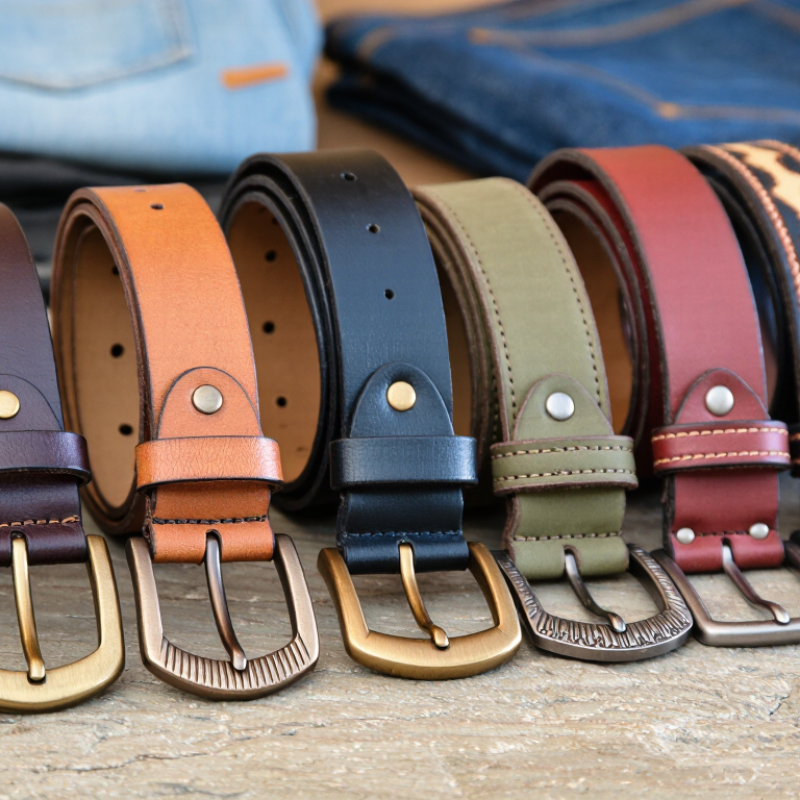
For global buyers, the strongest 2026 collections may combine recognizable vintage details with modern production discipline. Vegetable-tanned leather, recycled alternatives, reinforced stitching, and replaceable buckles can improve long-term value. Product images should show belt thickness, edge finishing, buckle dimensions, and sizing clearly. Small details matter.
No forecast is flawless.
Colorfastness, nickel compliance, packaging rules, and regional labeling requirements still need verification before purchase. Experience suggests that attractive styling alone cannot secure repeat orders. A belt must fit comfortably, survive regular use, and arrive with consistent quality across batches. The following guide evaluates leading Retro Style Belts through that practical lens, balancing trend appeal with evidence, usability, and responsible sourcing.
Retro Belt Taxonomy: Styles, Materials, and Era Markers
Retro belts are easier to source when buyers classify the era before judging the decoration. In my sourcing work, I separate them into three style groups: Western, military utility, and late-century dress belts. Western versions often use wide straps, engraved metal, and large buckles. Military-inspired styles favor flat hardware, stitched edges, and practical adjustability. Dress belts usually show slimmer profiles, polished surfaces, and restrained buckles. The categories overlap. That is the difficult part.
Material gives the next clue. Full-grain leather develops darker edges and visible creasing around the holes. Corrected leather looks more uniform, but may crack sharply near the buckle. Suede feels softer and often carries a brushed, matte surface. Woven textile belts appear lighter and more flexible. Buyers should record strap width, buckle alloy, lining, hole spacing, and odor during inspection. Small measurements prevent expensive misunderstandings.
Era markers are often subtle. Rounded buckles and warm tan leather suggest earlier casual styling, while squared hardware and black or oxblood finishes reflect later minimalist trends. The ThredUp 2025 Resale Report projects the global secondhand apparel market will reach 367 billion dollars by 2029, supporting continued interest in identifiable older design. Euromonitor International’s apparel and footwear research also tracks durability and resale value as growing purchase considerations. These reports support the market direction, not every product claim. A belt may look convincingly vintage yet use modern materials. I sometimes misread surface aging. Buyers should test flexibility, inspect stitching under bright light, and request detailed measurements before ordering.
Market Demand: Accessories Growth Signals in Euromonitor 2025 Data
2026 Top Retro Style Belts for Global Buyers
Euromonitor International’s 2025 consumer research identifies accessories as practical tools for personal expression. That matters in a cautious fashion market. Shoppers may delay expensive purchases, yet still refresh an outfit with one visible accessory. McKinsey’s The State of Fashion 2025 also describes global fashion growth as modest, with value and versatility becoming stronger purchase factors. Retro belts fit this shift. Their familiar buckles, aged textures, and wider silhouettes create noticeable change without replacing a full wardrobe. Demand is not guaranteed, however. Some vintage-inspired details can look costume-like when sizing, leather quality, or finishing feels careless.
Tips: Global buyers should test three points before ordering. Check waist measurements in centimeters, not only standard sizes. Request close photos of stitching, edge paint, buckle plating, and belt thickness. Neutral brown, black, and worn tan usually travel across markets more easily. Buyers should also compare return policies and material disclosures. A low price can hide weak hardware or inconsistent sizing.
Euromonitor’s 2025 data signals continued interest in affordable, expressive accessories, but regional taste remains uneven. Younger consumers often prefer bold hardware and flexible styling. Mature customers may favor restrained colors and durable construction. Retailers can reduce risk by sampling narrow widths alongside statement designs. I would not treat “retro” as one universal trend. It changes between cities, climates, and social settings. That uncertainty is inconvenient, but it makes local testing more reliable than broad trend claims.
Material Benchmark: Leather, PU, and Recycled Fibers by Textile Exchange
2026 Top Retro Style Belts for Global Buyers
Material Benchmark: Leather, PU, and Recycled Fibers by Textile Exchange
Retro belts are returning with wider straps, brushed buckles, and visible grain. For global buyers, material choice affects durability, price, compliance, and customer trust. Full-grain leather offers strong recovery around the waist and develops darker edges through use. Leather Naturally notes that more than one billion hides and skins enter the global supply chain annually, mainly as a co-product of food production. Buyers should still verify tanning chemicals, traceability, and wastewater controls.
PU provides consistent color and a smoother surface. It also supports lower-cost collections with stable sizing. However, peeling can appear near punched holes or sharp buckle folds. Sample testing should include flexing, humidity exposure, and abrasion. Textile Exchange’s Materials Market Report 2024 records global fiber production at about 124 million tonnes in 2023, with polyester representing roughly 57%. Recycled polyester remains a practical option for woven belt webbing, though recycled content does not automatically prove low impact.
Recycled fibers can create a lighter, softer belt with useful texture. Look for transaction certificates, recycled-content evidence, and clear fiber percentages. Small details matter: a metal keeper may outlast a weak strap, while thick stitching can still feel uncomfortable. My own benchmark preference is leather for premium tactile aging, PU for controlled fashion color, and recycled webbing for casual utility. This is not perfect. A recycled claim may describe only one component, and leather quality varies sharply between suppliers. Test the finished belt, not only the material swatch.
2026 Top Retro Style Belts for Global Buyers
Material Benchmark: Leather, PU, and Recycled Polyester
This reference benchmark compares the primary feedstock characteristics of common belt materials. Leather is animal-derived, PU is a fossil-based polymer, and recycled polyester uses recycled feedstock while remaining a fossil-based polymer. The figures represent material-basis indicators, not market share, product quality scores, or company data.
Reference: Textile Exchange, Materials Market Report methodology for recycled and synthetic fiber classification; material characteristics are shown on a 0–100% basis.
Buyer Scorecard: MOQ, Lead Time, Margin, and Defect-Rate KPIs
For 2026, retro style belts are returning with aged brass buckles, stitched leather, and muted olive or tan colors. Global buyers should judge more than appearance. A reliable scorecard connects MOQ, lead time, margin, and defect rate to actual purchasing risk. Ask for material samples, buckle measurements, and recent inspection records before placing a trial order.
Tips: Set a small test MOQ first. Compare the quoted lead time with production calendars, not promises. A 30-day estimate can become 45 days during peak demand. Track margin after freight, packaging, duties, and returns. A belt priced at $4 may not be profitable at a $9 landed cost. Target a margin that still covers slow-moving colors and replacement shipments.
Measure defects by category: loose stitching, uneven holes, scratched buckles, and incorrect sizing. Record each issue per 1,000 units. A 2% defect rate sounds low, but it means 20 questionable belts in every 1,000. Use pre-shipment checks and keep photographic evidence. In my experience, visual approval alone misses buckle alignment problems. I once accepted a sample too quickly. That decision caused avoidable rework. Buyers should review fit across several waist sizes, because retro sizing is often inconsistent. Track every supplier on the same spreadsheet, even when the data feels incomplete.
2026 Top Retro Style Belts for Global Buyers - Buyer Scorecard: MOQ, Lead Time, Margin, and Defect-Rate KPIs
| Retro Belt Style |
Primary Material |
Typical MOQ
(Units) |
Sample Lead Time
(Days) |
Bulk Lead Time
(Days) |
Indicative FOB Cost
(USD/Unit) |
Suggested Retail
(USD/Unit) |
Gross Margin
(%) |
Target Defect Rate
(%) |
Buyer Score
(100) |
| Vintage Brass Western Belt |
Full-grain leather with antique brass buckle |
300 |
7–10 |
30–40 |
$8.50–$11.00 |
$39.00–$49.00 |
72–78% |
≤2.0% |
92 |
| 1970s Wide Tooled Belt |
Embossed split leather with zinc-alloy buckle |
500 |
8–12 |
35–45 |
$6.20–$8.40 |
$29.00–$39.00 |
71–79% |
≤2.5% |
89 |
| Retro Woven Stretch Belt |
Polyester-elastane webbing with leather trim |
500 |
6–9 |
25–35 |
$3.80–$5.60 |
$22.00–$29.00 |
75–83% |
≤1.8% |
94 |
| Plaque Buckle Fashion Belt |
PU leather with polished zinc-alloy plaque |
800 |
10–14 |
40–50 |
$4.50–$6.80 |
$24.00–$34.00 |
72–81% |
≤2.5% |
87 |
| Western Concho Stud Belt |
Top-grain leather with metal conchos and rivets |
300 |
9–13 |
35–45 |
$9.20–$12.80 |
$45.00–$59.00 |
71–78% |
≤2.0% |
91 |
| Canvas Military-Style Belt |
Cotton canvas with metal slide buckle |
600 |
6–9 |
25–35 |
$3.20–$4.80 |
$18.00–$26.00 |
73–82% |
≤1.5% |
93 |
| Braided Leather Casual Belt |
Braided leather with solid metal buckle |
400 |
8–11 |
30–40 |
$6.80–$9.50 |
$32.00–$45.00 |
70–79% |
≤2.0% |
90 |
| Color-Block Vinyl Belt |
Embossed PU with nickel-free alloy buckle |
1,000 |
10–14 |
35–50 |
$2.80–$4.20 |
$16.00–$24.00 |
74–83% |
≤3.0% |
84 |
Scoring basis: MOQ 20%, bulk lead time 20%, gross margin 30%, defect-rate target 20%, and sampling responsiveness 10%.
Commercial note: Figures are indicative 2026 buyer-planning benchmarks for comparable retro-style belt specifications. Final pricing, production timing, and quality performance depend on material grade, hardware, packaging, customization, order quantity, and destination.