The 2026 sourcing landscape is reshaping how buyers evaluate Elegant Style Necklaces. Refined design now matters alongside material transparency, production consistency, and commercial versatility. A necklace may look beautiful in a studio photograph. It must also feel balanced on the neck, close securely, and remain attractive under retail lighting.
Coco Chanel’s famous advice remains valuable: “Before you leave the house, look in the mirror and take at least one thing off.” Her principle encourages restraint, proportion, and intentional styling. These qualities will influence 2026 collections, especially through fine chains, sculptural pendants, pearl accents, and quietly polished metal finishes. The strongest sourcing opportunities may combine visual simplicity with small, memorable details.
Experienced buyers should examine plating thickness, clasp performance, stone setting, packaging, and supplier communication. Documentation matters. So does the supplier’s willingness to discuss imperfections. Samples can reveal uneven polishing, awkward weight distribution, or colors that differ from product images. Those issues are easy to miss.
Comfort matters most.
This outline considers the leading elegant necklace directions expected for 2026. It also reviews sourcing practicality, including minimum order quantities, customization flexibility, lead times, and quality control. Predictions are never flawless. Consumer taste can shift quickly, and a trend that appears timeless may become ordinary within one season. Thoughtful buyers should test designs with real customers before committing to large orders. Elegant Style Necklaces succeed when beauty, reliability, and everyday wearability work together.
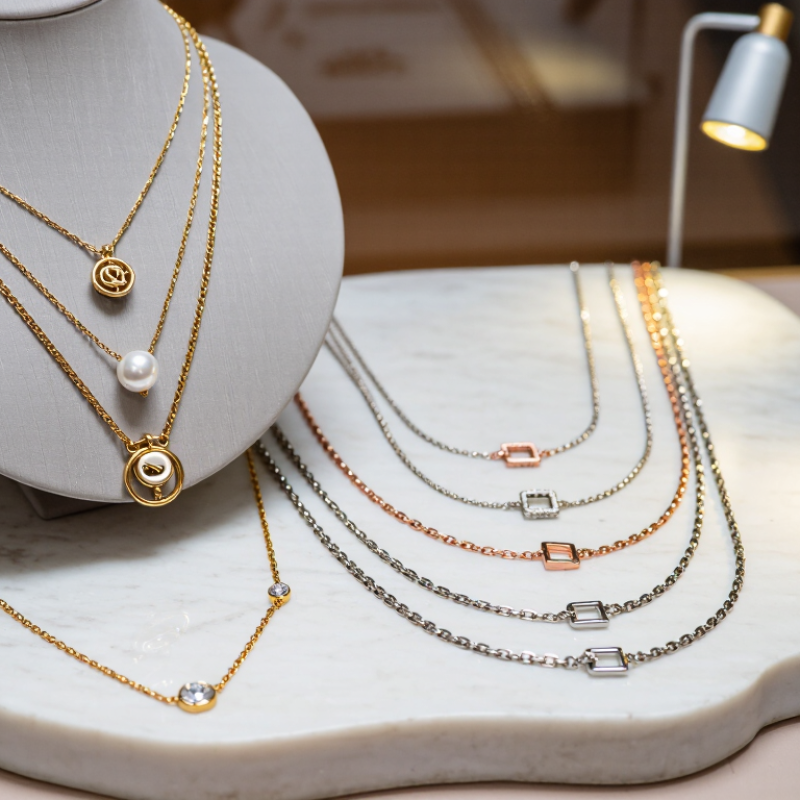
Elegant style necklaces for 2026 sourcing should express quiet refinement rather than excessive decoration. Clean lines, balanced proportions, and comfortable weight will define the category. Fine chains, soft pearls, small sculptural pendants, and subtle geometric details are practical directions for commercial collections. Champagne gold, brushed silver, warm steel, and restrained two-tone finishes can support different wardrobes. The best designs should look polished under natural light, not only in edited product images.
From my sourcing experience, elegance depends on construction as much as appearance. Check clasp strength, chain flexibility, pendant edges, plating consistency, and adjustment length before approving samples. A necklace should rest smoothly against the collarbone without pulling or twisting. Suppliers should provide clear material declarations, production records, and relevant safety testing, including nickel-release checks where applicable. Small details matter.
I once judged a sample too quickly because its pendant looked refined. The chain later felt stiff during wear testing. That mistake changed my review process. Sourcing teams should inspect several samples, compare measurements, and test packaging protection before placing larger orders. Elegant style also needs reliable repeatability. A beautiful prototype is not enough. Designers and buyers should question whether the same finish, weight, and clasp performance can remain stable across production batches. Some 2026 trends may appear attractive but become dated quickly, so adaptable shapes deserve careful consideration.

This chart shows common necklace length bands that can guide 2026 elegant-style sourcing. Collar and choker lengths suit refined, close-to-neck designs, while princess, matinee, and opera lengths support pendants, pearl strands, and layered statement pieces. The measurements are practical jewelry sizing benchmarks rather than market-share estimates.
Elegant necklaces in 2026 will depend less on decoration and more on material integrity. Sourcing teams should examine recycled sterling silver, responsibly documented gold, freshwater pearls, and durable laboratory-grown stones. Each material needs clear origin records and consistent quality checks. A beautiful surface means little if the metal bends during normal wear.
Craftsmanship should begin with a balanced chain and secure clasp. Inspect soldered links under magnification. The joints should look smooth, without dark gaps or sharp edges. Pearl necklaces need even spacing, firm knotting, and matching luster. Stone settings must hold each gem tightly, while still allowing light to enter. Small details matter.
Experience has taught me that samples can be misleading. A polished prototype may hide weak plating or uneven weight distribution. Ask for abrasion testing, metal composition reports, and repeated clasp trials. Check skin-contact parts for nickel, lead, and cadmium compliance in the target market. Packaging should also prevent scratches during transport. No checklist is perfect. Suppliers sometimes provide excellent samples but inconsistent production. I would compare several batches, record measurements, and inspect failed pieces honestly. That extra scrutiny can reveal whether an elegant necklace is truly ready for professional sourcing.
In 2026, elegant necklaces are moving toward quiet detail rather than excessive decoration. Sourcing teams are watching slim chains, sculptural pendants, and adjustable lengths. These designs suit both office dressing and evening occasions. Pearl-like beads, brushed metal, and soft geometric forms are gaining attention. A small oval pendant can feel more modern than a large statement piece.
Emerging trends also show stronger interest in layered necklaces. Buyers are combining different chain weights, pendant sizes, and finishes. Warm gold tones remain popular, while silver and mixed-metal designs add a cooler contrast. Recycled materials and traceable production are becoming important purchasing factors. Suppliers should provide clear material details, plating information, and wear-testing results. In practice, a necklace may look refined in photographs but feel heavy after two hours. That detail matters.
Tips: Request samples in several lengths before placing a large order. Check clasp strength, chain flexibility, and pendant balance by hand. Compare color consistency under natural light. Ask for packaging that prevents tangling during transport. Keep trend pieces limited, because fashion changes quickly. Core designs should remain easier to restock.
Sourcing decisions should also reflect real customer habits. Lightweight necklaces work well for daily use, while removable pendants improve styling flexibility. I have found that simple designs often sell steadily, but this is not universal. Regional preferences can change the result. A polished surface may attract attention, yet a lightly textured finish can hide minor marks better. Teams should test both before choosing a final collection.
2026 sourcing outlook based on established jewelry design directions, wearable proportions, material preferences, and emerging styling trends
| Design Direction | Signature Features | Recommended Materials | Common Length | Best Styling Occasion | 2026 Trend Signal | Sourcing Considerations |
|---|---|---|---|---|---|---|
| Minimalist Pendant | Single polished pendant on a fine chain; clean geometric, bar, circle, or teardrop forms | Sterling silver, gold vermeil, 14K gold, recycled metal options | 16–18 in / 40.6–45.7 cm | Office wear, everyday dressing, gifting | Very strong | Prioritize lightweight construction, secure clasps, adjustable extenders, and consistent plating thickness. |
| Pearl Strand Necklace | Cultured pearls arranged in classic strands or updated asymmetric layouts | Freshwater cultured pearls, glass or crystal accents, sterling silver, gold-tone findings | 16–20 in / 40.6–50.8 cm | Formal events, bridal styling, refined daywear | Strong | Request pearl-size consistency, surface-quality grading, knotting specifications, and secure end caps. |
| Station Necklace | Evenly spaced beads, gemstones, or metal stations along a delicate chain | Gold vermeil, sterling silver, recycled gold, natural or lab-created stones | 18–24 in / 45.7–61.0 cm | Layering, cocktail events, elevated casual looks | Strong | Confirm station spacing, chain durability, stone matching, and resistance to twisting during wear. |
| Sculptural Collar | Structured curved silhouette that follows the neckline; smooth or organically molded surface | Gold-tone stainless steel, sterling silver, brass with protective plating | 14–16 in / 35.6–40.6 cm | Eveningwear, minimalist tailoring, statement styling | Very strong | Check neck comfort, edge smoothness, spring strength, weight distribution, and tarnish protection. |
| Layered Chain Set | Two or three coordinated chains with different textures, weights, and pendant sizes | Stainless steel, sterling silver, gold vermeil, recycled brass | 16–22 in / 40.6–55.9 cm | Everyday fashion, travel wardrobes, casual eveningwear | Very strong | Use tangle-reducing connectors, differentiated chain lengths, and matching color tones across components. |
| Mixed-Metal Necklace | Intentional combination of warm and cool metal colors in one coordinated design | Sterling silver, stainless steel, gold vermeil, two-tone plated alloys | 18–22 in / 45.7–55.9 cm | Contemporary officewear, weekend styling, transitional wardrobes | Strong | Verify color matching between plating batches and test contact points for premature rubbing or discoloration. |
| Gemstone Drop Necklace | One or more suspended stones creating vertical movement and a refined focal point | Natural gemstones, lab-created stones, sterling silver, 14K gold, gold vermeil | 17–20 in / 43.2–50.8 cm | Dinner events, celebrations, formal gifting | Strong | Specify stone origin disclosure, treatment details, color tolerance, setting security, and drop alignment. |
| Chain-Link Statement | Interlocking oval, paperclip, curb, or elongated links with a polished finish | Stainless steel, sterling silver, gold-tone brass, gold vermeil | 16–20 in / 40.6–50.8 cm | Modern tailoring, evening looks, fashion-forward styling | Strong | Balance visual volume with wearable weight; inspect welds, link movement, clasp strength, and surface finish. |
| Ribbon or Cord Choker | Soft ribbon, textile cord, or velvet-like band with a refined central ornament | Silk or polyester ribbon, cotton cord, plated metal, glass or crystal accents | 13–15 in / 33.0–38.1 cm | Occasion dressing, romantic styling, seasonal collections | Growing | Test colorfastness, seam durability, adjustability, skin comfort, and the attachment between textile and metal parts. |
| Personalized Initial or Symbol | Discreet initials, dates, zodiac symbols, abstract icons, or customizable charms | Sterling silver, gold vermeil, 14K gold, recycled metal, enamel details | 16–18 in / 40.6–45.7 cm | Personal gifting, everyday wear, milestone occasions | Very strong | Plan for accurate engraving, character-limit controls, sample approval, lead-time buffers, and low-defect production. |
| Organic Textured Pendant | Hammered, brushed, rippled, or nature-inspired surfaces with irregular silhouettes | Sterling silver, recycled brass, gold vermeil, gold-tone stainless steel | 18–22 in / 45.7–55.9 cm | Art-inspired styling, resort wear, contemporary daywear | Strong | Define acceptable texture variation, ensure smooth reverse surfaces, and verify that irregular forms remain comfortable. |
| Convertible Multiway Necklace | Adjustable or detachable construction that can be worn as a short necklace, long necklace, or layered piece | Sterling silver, gold vermeil, stainless steel, cultured pearls, interchangeable charms | 16–30 in / 40.6–76.2 cm | Travel, capsule wardrobes, gifting, value-focused collections | Growing | Evaluate connector reliability, adjustment range, component compatibility, and the durability of repeated reconfiguration. |
Note: Lengths are standard necklace ranges. Trend signals represent a forward-looking 2026 sourcing assessment rather than guaranteed sales performance.
Choosing necklaces for different customer segments requires more than following a seasonal color chart. In 2026, elegant designs are shifting toward slim chains, small geometric pendants, and softly layered lengths. Office customers often prefer lightweight necklaces with clean lines and low shine. A 40–45 cm chain can sit neatly above a blouse collar. Keep it restrained. Details matter.
For mature buyers, sourcing teams can consider pearl-like beads, smooth oval links, and warm metallic finishes. These features feel refined without appearing overly formal. Gift shoppers may choose adjustable necklaces with subtle symbols or removable pendants. Adjustable designs reduce sizing concerns and simplify inventory planning.
I have found that tactile samples reveal problems quickly. A clasp may look elegant but feel weak in the hand. That detail should not be ignored.
Younger style-focused customers may respond to mixed textures, fine layering pieces, and asymmetrical pendants. However, excessive decoration can reduce repeat wear. Suppliers should provide material specifications, plating information, measurement charts, and test reports from qualified laboratories.
Check color consistency across production batches. Ask for clear images under natural light. Not always. A beautiful sample can hide uneven finishing or uncomfortable edges.
Ethical sourcing also requires traceable production records and responsible material claims. Customer feedback should guide revisions, even when it challenges the original design idea.
In 2026, elegant necklace sourcing is moving toward quiet detail: slim chains, sculptural pendants, pearl accents, and adjustable lengths. The strongest suppliers can explain why each design fits current retail needs. I look for measurable answers, not polished promises. Can they provide alloy composition, plating thickness, stone origin, and production tolerances? Photos prove little. Ask for pre-production samples. This step often reveals uneven soldering, weak clasps, or sharp pendant edges.
Supplier evaluation should include factory capability, sample consistency, and inspection procedures. A reliable supplier shares clear specifications and accepts reasonable third-party testing. Check whether the same necklace keeps its color after abrasion and simple moisture exposure. Confirm clasp tension, chain flexibility, pendant weight, and packaging protection. Small details matter. A damaged jewelry box can reduce the product’s perceived value before opening.
Sourcing value is not the lowest unit price. Compare minimum order quantities, lead times, defect policies, customization fees, and shipping costs. Request a full landed-cost estimate before approving production. I once focused too heavily on a lower quote and underestimated rework expenses. That mistake still influences my supplier reviews. Communication also deserves measurement: response speed, document accuracy, and willingness to correct samples. Sustainable material claims should include records, not vague wording. Some suppliers appear excellent during sampling but struggle with volume, so a limited trial order can expose that gap.